
More than 70% of new drug molecules face bioavailability challenges, making micronization an increasingly strategic process in pharmaceutical development.
By reducing particle size, micronization can improve dissolution rates, support bioavailability potential and optimize formulation performance, especially for poorly soluble APIs.
Beyond Just Size Reduction
Micronization refers to the mechanical process of reducing the particle size of a compound, typically to the micrometer scale (1–10 µm). While the goal may seem simple, its impact is profound. Reducing particle size leads to a significant increase in surface area, which in turn accelerates dissolution—a critical factor for improving the bioavailability of poorly soluble APIs, particularly Class II drugs as defined by the Biopharmaceutical Classification System (BCS).
But the benefits don’t stop at solubility.
AGC Pharma Chemicals: Setting the Standard in Micronization
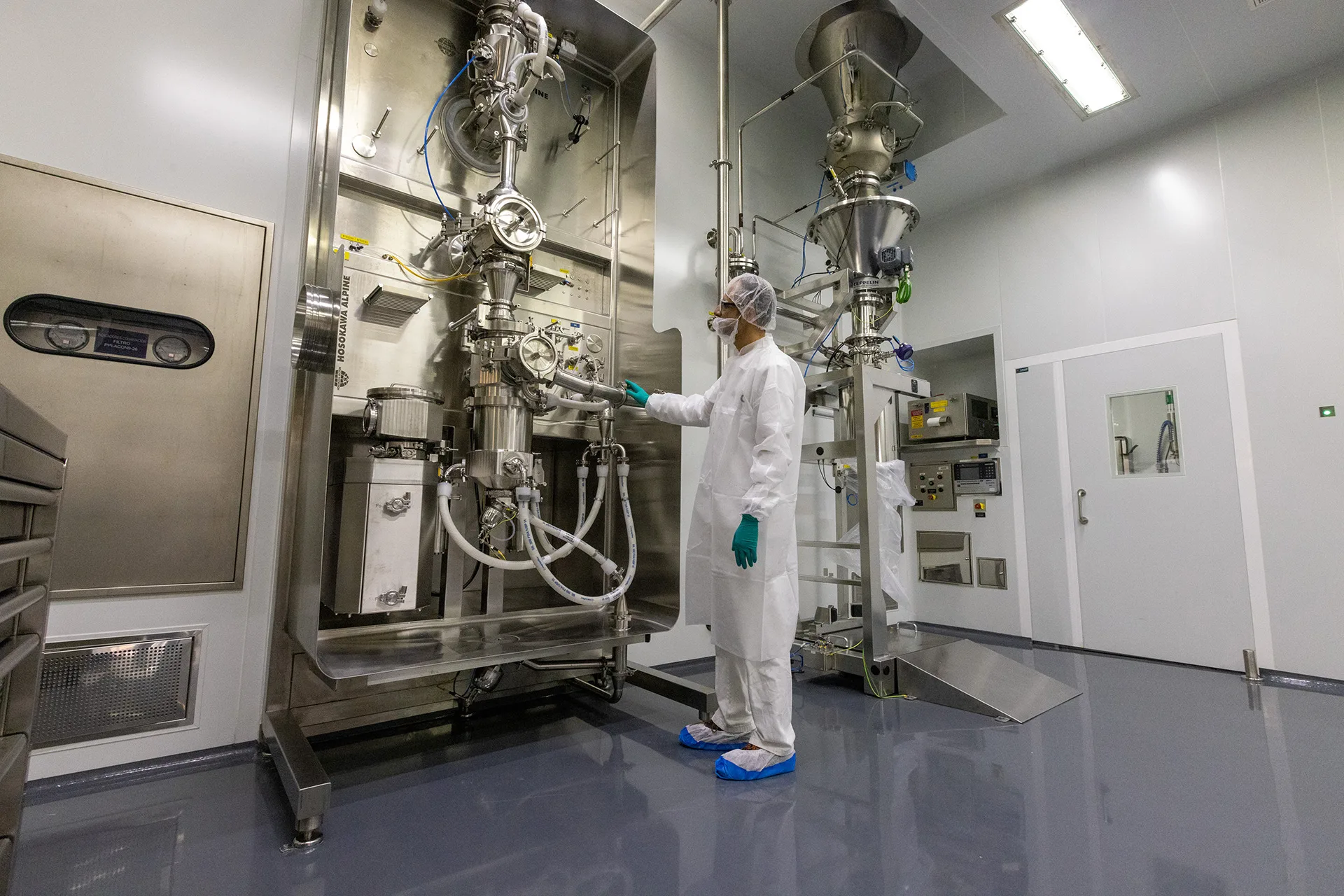
At AGC Pharma Chemicals, we’ve taken micronization a step further with the implementation of the Hosokawa Alpine Multi-Mill 200 AFG/100 ZPS—a dual-system technology that seamlessly integrates opposed bed jet milling with mechanical impact milling in one efficient platform.
Let’s explore the science, strategy, and technology behind this powerful technique… and how AGC Pharma Chemicals is leading the way, in our Micronization White Paper.